Showing posts with label Fiction. Show all posts

Friday, March 18, 2011

Chehov Plays - Invanov, The Cherry Orchard, The Seagull, Uncle Vania, Three Sisters, The Bear, The Proposal, and A Jubilee

Author:  Chehov, Anton.

  • Paperback: 453 pages
  • Publisher: Penguin Books Ltd.(1954)
  • Language English
  • Price: $8

The dramatic works of Anton Chekhov (1860-1904) present the actions of ordinary people. He avoids any explicit political treatment, but the depth and subtlety of his art has generated a wealth of interpretation. His representation of human relationships is infinitely sympathetic, and each play contains at least one character who expresses Chekhov's hopes for a brighter future. "The Cherry Orchard" and "Three Sisters" was first published in this translation in 1951. "The Seagull", "Uncle Vania", "The Bear", "The Proposal" and "The Jubilee" were first published in this translation in 1954. 

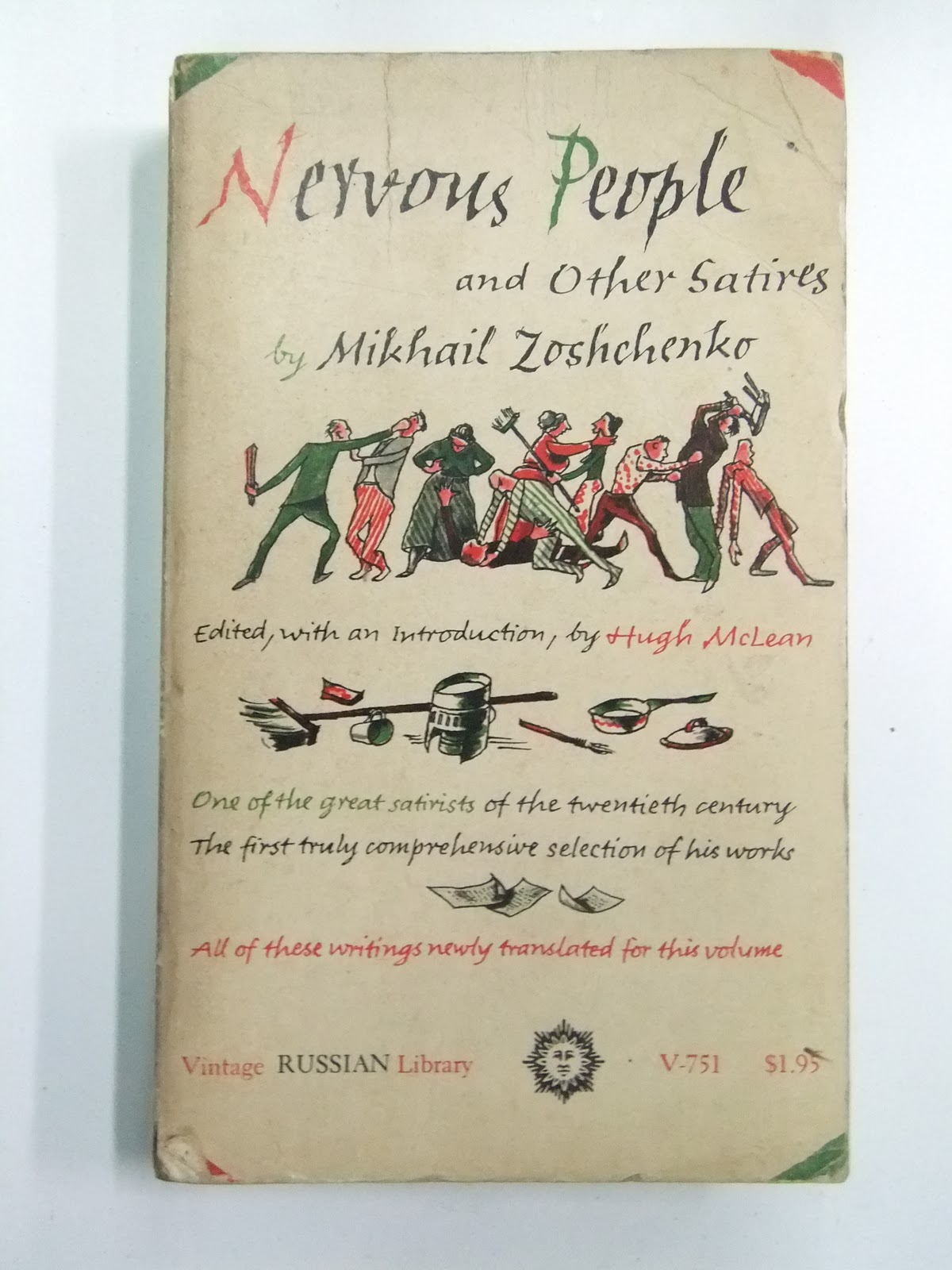
Nervous People and Other Satire

Author:  Zoshehenko, Mikhail.

  • Paperback: 449 pages
  • Publisher: Vintage Books.(1963)
  • Language English
  • Price: $8

This review is from: Nervous People and Other Satires (Paperback)
When I read Nervous People for a Russian Lit class I was overwhelmed by the absurd humor. There hasn't been a funnier, politically poignant and appealing satirist since Lewis Carrol or Jonathan Swift.Zoschenko etches out distinct parts of the Soviet landscape with hilarious spoofs, ridiculous characters and dark conclusions; Gogol would be proud.
Despite the passing of time and demise of the Soviet Union the humor still survives. What's poking fun at Russians can easily be translated to the same for American government and bureaucracy.
Admittedly this isn't for everyone. It's not all-age-encompassing like "Alice in Wonderland" or as current as PJ O'Rouke. Nevertheless it's worth a read for young and old adults.

Exemplary Stories

Author:  Cervantes, Miguel De.

  • Paperback: 252 pages
  • Publisher: Penguin Books Ltd.(1972)
  • Language English
  • Price: $6

More popular in their day than Don Quxixote, Cervantes's Exemplary Stories (1613) surprise, challenge and delight. Ranging from the picaresque to the satirical, the Exemplary Stories defy the conventions of heroic chivalric literature through a combination of comic irony, moral ambiguity, realism, and sheer mirth. This new translation captures the full vigor of Cervantes's wit and make available two rarely printed gems, "The Illustrious Kitchen Maid" and "The Power of Blood."

The Devils


Author:  Dostoyevsky, Fyodor.

  • Hardcover: 704 pages
  • Publisher: Penguin Books Ltd.(1971)
  • Language English
  • Price: $8
This is an amazing book. Pervaded by Dostoevsky's usual characterization, the author reaches into the souls of his numerous characters as only he and very few others can. This story has Dostoevsky's favorite existential philosophic undercurrents. The story is an account of how the budding socialist revolutionary movement affects one small Russian town. Dostoevsky gives this phenomenon the treatment it deserves - a mocking condescension with an amusing portrayal or people who are drawn to radical movements. The result is a novel filled with humor. The tragedy is is presented as a natural consequence of people who are making mistakes at every step, confusing sensibility for absurdity. That is what their "possession" really is. It is about a whole generation caught up in the materialization and nihilism of the 19th century resulting from the scientific revolution. To me, this book is on par or surpasses The Brothers Karamazov. It may be viewed as either an atheistic challenge taken up in the latter book or as a repudiation of atheism manifested in one level of the latter. Whatever it is, it's more proof that Dostoevsky is the greatest writer who ever lived.

Strange News From Another Star

Author:  Hesse, Hermann

  • Paperback: 122 pages
  • Publisher: Penguin Books Ltd.(1976)
  • Language English
  • Price: $3 

I thought that this would be a remarkable collection of stories. There was a special mood in the opening tale , 'Augustus'. It was about a remarkable child whose mother gives him a special blessing that he will be 'loved by everyone he meets'. The consequence of this wish when it is realized is that he becomes spoiled, selfish, non- appreciative wealthy person who takes everything he receives for granted. The story does go one step beyond this but somehow the transformation involved in less than miraculous, and certainly far from happy. The Tale evokes great curiosity and interest at its outset but then somehow fails to realize itself.
The same is true of the second story 'The Poet' which begins also quite remarkably with the young poet offered a completely happy life turning from it to dedicate himself to his art. But this tale too does not follow through in a way which gives the reader a sense of the wonder and greatness of human life. The impression instead is one of disappointment.
It seems as if Hesse knows how to create an interesting proposition or idea for the story without knowing how to make the transformations in the story of equal interest. So too the characters of these stories do not seem very rich and rounded but rather abstract embodiments of a certain idea or concept.

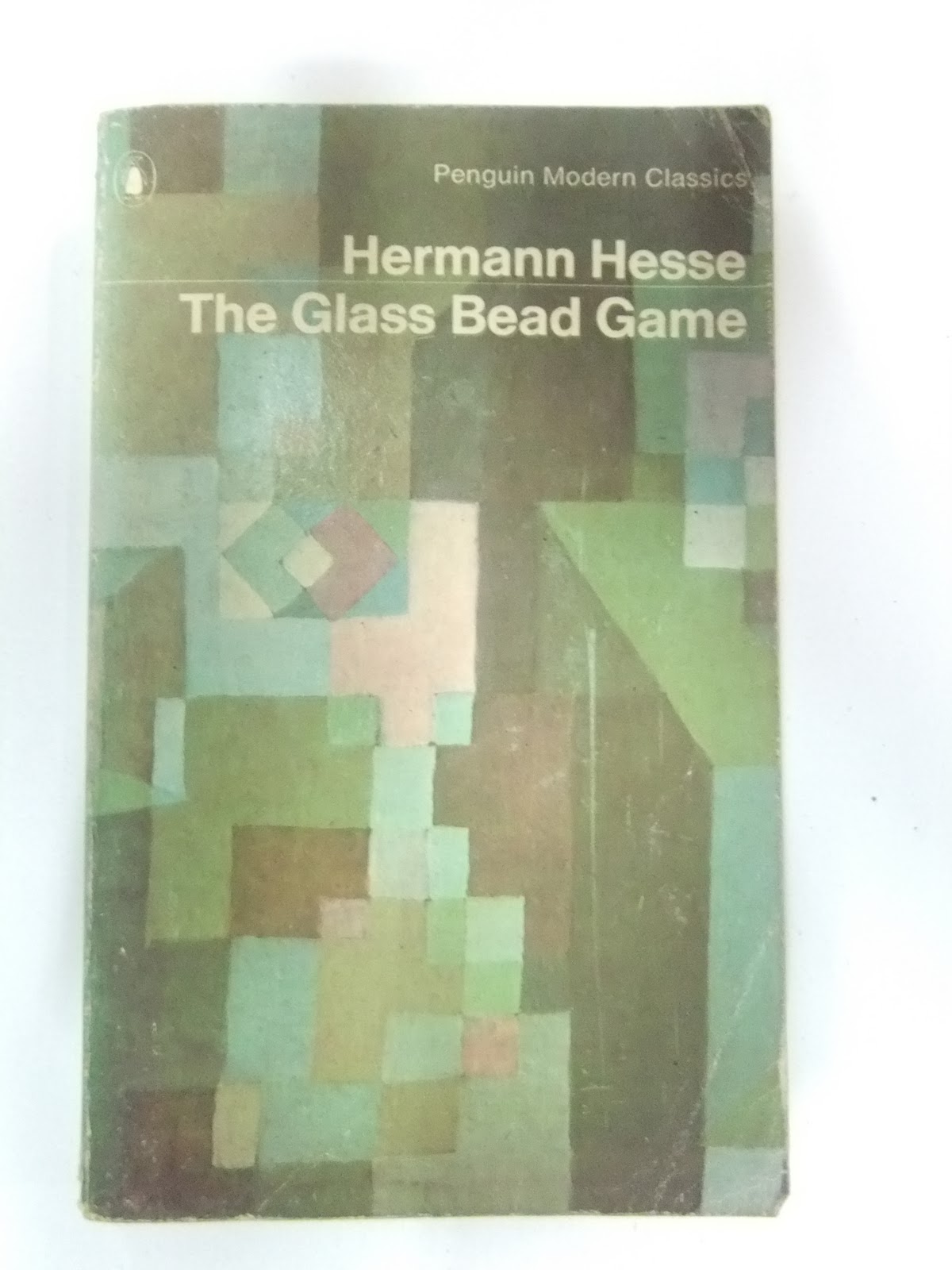
The Glass Bead Game: (Magister Ludi)

Author:  Hesse, Hermann

  • Paperback: 519 pages
  • Publisher: Penguin Books Ltd.(1977)
  • Language English
  • Price: $8 

This review is from: The Glass Bead Game: (Magister Ludi) A Novel (Paperback)
This book is to Hesse as "The Brothers Karamazov" is to Dostoevsky. Throughout it are the same ideas that have been put forth in earlier works, often with similar characters, but with a fuller and more articulate expression than before. Like Dostoevsky, he finally figured out how to say *everything* he had to say in one volume. So it comes as no surprise that those only concerned with certain aspects (particularly the more spiritual ones) of Hesse's writing would find it disjointed and tedious. If you want to read more of Hesse's stories about tormented and/or confused souls looking for meaning in the world, this isn't your book - go reread Damien and Steppenwolf. This book has that esoteric search, but its main character, Joseph Knecht, pursues this search as a curiousity and not out of some desperate need. I'm sure that's why several people seem to find him lacking compared to other Hesse protagonists - they're expecting a conflict in him that isn't there.As I read these other reviews I find it fascinating that everyone seems to come away from the book with such different things that they were struck with. In my case, this was the socio-political commentary. Through this book, Hesse comments on our own time and on a fictional opposite to it, thoroughly exposing the flaws in both. I remember most distinctly Knecht's letter of resignation from Magister Ludi, where he tells his colleagues that although they understand the importance of their society's existence, they made the fatal mistake of not educating the people who support them. That they cannot take the existence of what they have for granted, for the day would eventually come when all they built would be dismantled. Perhaps this was because I read this book when I was in an institution that resembled much of what Hesse wrote about, and exactly when Congress cut the NEA.
Reading this book changed my view of the world most in that it changed my expectations of it. More to the point, I abandoned my expectations. I am much more apt to let other people be themselves. To explain how or why would take far too long, suffice it to say that there is more to this book than a pursuit for spiritual meaning or a balance of intellectual and physical need, but also balance on many other levels, and Hesse explores all of them in his classic manner - first by their disparity, then by their eventual unity. A stunning conclusion to the career of one the greatest writers of all time.

Maxim Gorky Collected Works in Ten Volumes - Volume III (Mother)

Author:  Gorky, Maxim.

  • Hardcover: 384 pages
  • Publisher: Progress Publishers; 1st edition (1979)
  • Language English
  • Price: $8
Few books in the world have had such a truly vast number of readers as "Mother" or have had such a direct and powerful influence on millions of human lives. "Mother" was the first book to describe so dramatically and vividly the life of the working class in pre-revolutionary Russia and its struggle against capitalism which resulted in the victory of the Great October Socialist Revolution. "Mother" was first published in an English translation, and not in its Russian original. It was brought out in 1906 in the United States where Gorky emigrated, compelled as he was to leave tsarist Russia where he was subject to continual persecution by the authorities.